Growing the Principal Pipeline: Inside a Breakthrough Coach-Inspired Leadership Apprenticeship
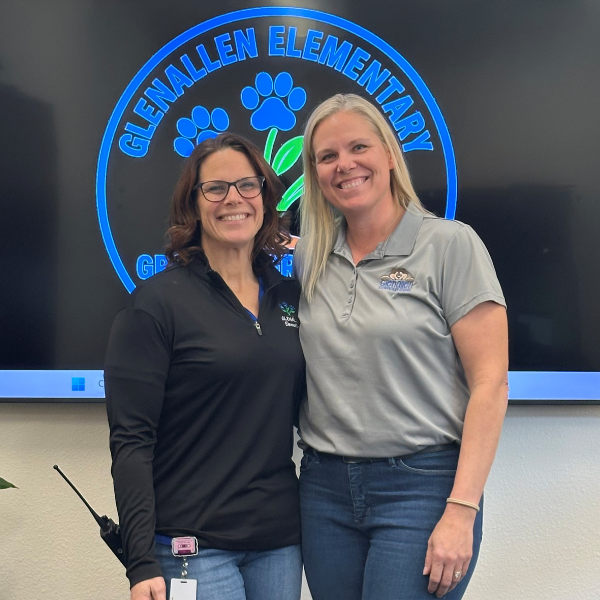
Strong school leadership is developed through intentional mentorship, structured opportunities, and a clear philosophy about how leaders grow. When Kelly McWilliams arrived at Glenallen Elementary in 2022 as a new Sarasota County Florida Schools’ Assistant Principal, she stepped into a school facing significant challenges: a large influx of new teachers, post-COVID learning loss, and a leadership role without a formal onboarding structure. She quickly realized that the demands of the job could easily consume every hour of her day.
But under the tutelage of Glenallen’s Breakthrough Coach-trained principal, Becky Drum, Kelly experienced a different model of leadership development grounded in intentional coaching, clear priorities, and sustainability. Over three years, Becky helped Kelly build the skillsets, confidence, judgment, and strategic thinking required of a principal. Having stepped into her own principalship in February 2026, Kelly reflects on how Becky’s development of her shaped her understanding of school leadership.
What was your professional background before becoming Glenallen Elementary’s Assistant Principal?
I spent my first two years teaching in New York State as a K-8, ESE inclusion teacher. I then moved to Florida and spent time teaching Special Education in Title I elementary schools. I taught general education before becoming Glenallen’s AP in June 2022. I also spent time as an elementary instructional coach, behavior specialist, and an Assistant Principal intern for one year before becoming Glenallen’s AP. I’m extremely excited to become Wilkinson School’s new principal this month – February 2026.
What challenges did you face when you arrived at Glenallen in 2022?
In 2022 we hired 17 new teachers out of 60 – that’s a lot of vacancies to fill in one summer! Our students were dealing with significant post-COVID learning loss, our students with disabilities were falling below the federal index, and Glenallen was double the size of my previous school. It felt like there was a lot to tackle all at once.
How did Becky Drum, Glenallen’s Principal, initiate your onboarding process?
First and foremost, she set out to reset my bad habits that interfered with maintaining clear work-life boundaries. In my previous role, my typical day ran from 6:45 am to 7:00 pm. But If I got a call, email or text at 1:00 am, I responded to it.
During my first six weeks at Glenallen, I texted Becky a picture of something I was working on late in the evening. In response, Becky sent back a photo of her in her hot tub, which read, ‘I need you to close the computer now and talk to me about this in the morning.’ Becky made it okay to turn off during non-work hours, while also teaching me how to make my minutes at work count. She taught me that doing your best requires that you bring your best, and bringing your best requires balance. That changed my world! I finally had the opportunity to create a life for myself outside of work and I seized it.
How did Becky train, develop and mentor you to meet Glenallen’s challenges?
From the moment she brought me on, Becky set a clear expectation that I would be observing classroom instruction for at least a day and half every week. She then had me track my time out, as well as my number of classroom observations, so that we could review both on a weekly basis, compare and contrast notes, and decide where we needed to focus our instructional efforts next. Every Friday we then scheduled our coaching time out for the following week.
In order to get a day and a half every week out in classrooms, Becky taught me to delegate. When I started at Glenallen, my automatic response to hearing problems on the radio was to immediately jump in and offer my assistance. The first time Becky witnessed me doing this she ordered me to, ‘Put the radio down, and let your team respond. This communicates that you have confidence in them and you’re not the first responder.’ It was a wake-up call for me and a fabulous lesson.
What did Becky’s three-year, gradual release model look like?
Year 1, we calibrated together weekly before meeting with our critical teams so that I got comfortable with her approach. That way our messaging was the same when we presented to staff. Afterward, in our debriefs, I could be vulnerable and ask her questions. This built my confidence and over time, I became more vocal during our team meetings.
She also insisted that I allow our behavior specialist to handle behavior investigations, funnel parent concerns to the school counselor, and let our interventionists coordinate testing schedules. At the same time, she taught me how to put systems in place so that I could hold my direct reports accountable for completing their assignments, while also making sure the work got done to our satisfaction.
Year 2 we divided and conquered. I took over managing the behavior teams and then reported back to her twice weekly as to how it was going. Becky made sure we had regularly scheduled meetings on Mondays and Fridays so that we were always calibrating and she had time to coach me.
Year 3, we continued this gradual release process. She brought me into lots of senior admin meetings to deepen my school management background. Then, this past fall, Becky needed to take a month-long personal leave. I was offered the chance to fly solo and I took it. Before she left, Becky told me, ‘I trust your judgement. Go for it! You know what to do.’
The management and leadership opportunities Becky gave me were intentional and supportive, and I’m a much better school administrator because of her approach. I’m now able to think and act decisively. I no longer second-guess myself. I’m ready for what’s next.
How has Becky’s mentorship changed your point of view about the AP role?
Typically, an AP runs defense to protect their principal’s time in classrooms. Ultimately, someone has to respond to pressing issues in the moment – that’s the reality of being an AP. But Becky taught me there’s a give and take to this. I don’t need to immediately jump into every situation. It’s perfectly ok to insist that our frontline people problem-solve on their own prior to sending their breakdowns to me. Our front office secretary, Damarys, has also been very good about backing me up by telling our staff, “No. You can handle this on your own. Kelly will follow-up tomorrow.”
What successes has Glenallen had in the past three years during your tenure?
When I started in 2022, Glenallen’s school grade was a C. In 2024, the school moved from a C to a B. Our two most underperforming subpopulations have shown consistent growth over the last two years and in fact, one of the groups is no longer under federal monitoring. Glenallen’s number of parent volunteers is up by 30%, and so are the hours they spend volunteering. Our families have become our partners. You see, feel and experience all of this when you walk on campus.
What advice do you have for school districts who are interested in developing effective site leaders?
The work we do is heavy and sometimes feels lonely. When you let it take up your workday, evenings and weekends, it’s unsustainable. We need to give ourselves permission to turn on and off. We need to cultivate both our professional and personal selves, and allow for them to be cohesive.
We need to model balance for our teachers if we want to keep them and build their capacity. We can’t be here till 10 o’clock every evening churning out emails. Who’d want that job! Learning how to pause a moment before acting, how to intentionally use time, and how to manage teams creates the opportunity for balance.
Conclusion
Kelly’s experience at Glenallen was an intentional apprenticeship in school leadership. Through Becky’s guidance, she learned how to prioritize the work that most impacts students, build trust in the people around her, and create a leadership approach that is effective and sustainable. That growth is reflected in Kelly’s readiness to become a principal and in Glenallen’s progress during those same years.
For districts hoping to cultivate the next generation of school leaders, Kelly’s experience offers an important reminder: when principals intentionally develop their AP’s, they strengthen the leadership pipeline in ways that benefit students, staff, and entire school communities.